



How to Clean Kitchen Countertops: A Complete Guide for Every Surface
Kitchen countertops work hard every day. From preparing meals and setting down groceries to handling spills and everyday messes, they are one of the most frequently used surfaces in your home. Knowing how to clean kitchen countertops properly can help keep your kitchen looking fresh while protecting the material from unnecessary damage.
The key is understanding that not every countertop should be cleaned the same way. Granite, quartz, marble, laminate, butcher block, and other surfaces each have different care requirements. Using the wrong cleaner or an overly abrasive tool can dull, scratch, stain, or otherwise damage a countertop.
Your Home Deserves the Right Care
At Atlas Home Improvement, we know that your home is one of your biggest investments and choosing who to trust with it is a big decision. As a family-owned and operated company, we take pride in doing every project the right way, using quality materials and providing the kind of craftsmanship and service our customers can count on.
From everyday kitchen maintenance to a complete kitchen transformation, we’re here to help homeowners create spaces that are beautiful, functional, and built to last. In this guide, we’ll show you how to clean kitchen countertops properly and protect your surfaces for years to come. If your countertops are worn, outdated, or difficult to maintain, contact Atlas Home Improvement or call 734-259-4374 to learn how we can help transform your kitchen.
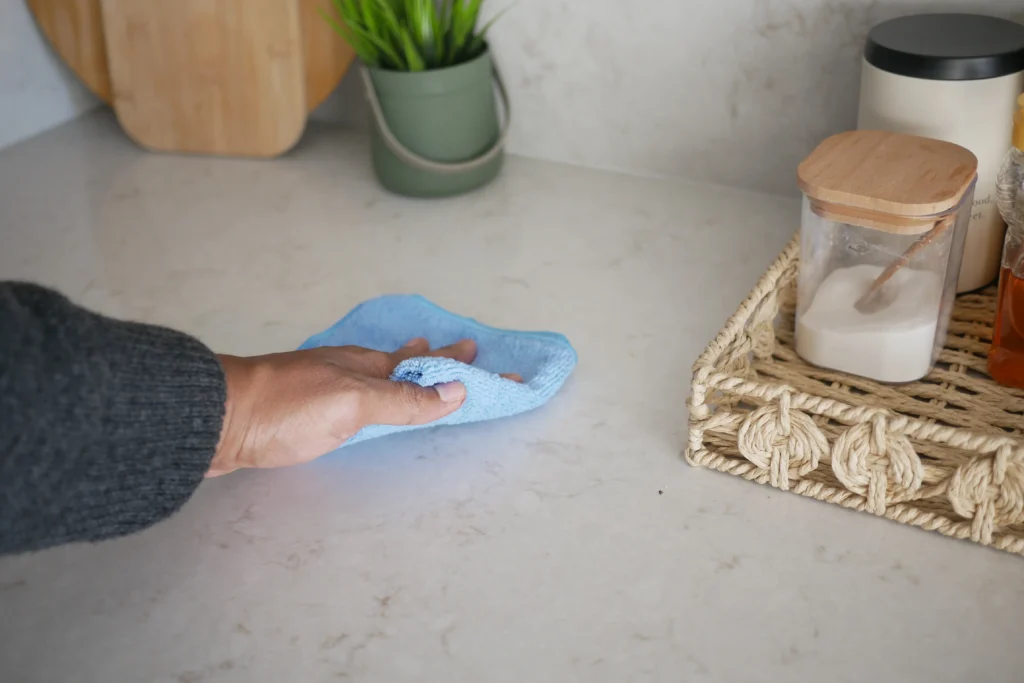
How to Clean Kitchen Countertops: Start With the Basics
Before reaching for a cleaning spray, take a moment to identify what your countertop is made from. The right cleaning method depends heavily on the material.
For everyday countertop cleaning, most surfaces can be maintained with a soft cloth, warm water, and a mild cleaner appropriate for the material. The goal is to remove crumbs, grease, food residue, and spills without damaging the countertop’s finish.
A basic cleaning routine includes:
- Remove appliances, dishes, cutting boards, and other items from the counter.
- Brush or wipe away crumbs and loose debris.
- Apply an appropriate countertop cleaner or use warm water with mild dish soap when suitable.
- Wipe the entire surface with a soft microfiber cloth.
- Pay extra attention to areas around the sink, cooktop, and frequently used preparation areas.
- Rinse away cleaner residue when necessary.
- Dry the surface with a clean, soft cloth.
The CDC recommends cleaning kitchen counters and food preparation areas with hot, soapy water and notes that surfaces should be cleaned before sanitizing or disinfecting.
How Often Should You Clean Kitchen Countertops?
For most households, clean kitchen countertops at least once a day or whenever they become visibly dirty. You should also clean countertops after preparing food, particularly when working with raw meat, poultry, seafood, or other foods that can contribute to cross-contamination.
A quick daily wipe-down helps prevent food residue and grease from accumulating. A more thorough cleaning can be done periodically, depending on how heavily your kitchen is used.
If a countertop comes into contact with raw meat or its juices, cleaning and sanitizing become especially important.
How to Clean Kitchen Countertops by Material
One of the biggest mistakes homeowners make is assuming one cleaner works for every countertop. While some basic cleaning methods overlap, different materials have different vulnerabilities.
Here’s a quick overview:
| Countertop Material | General Cleaning Approach | What to Watch For |
| Granite | Mild soap and water or stone-approved cleaner | Harsh acids and abrasives |
| Quartz | Mild soap and water or manufacturer-approved cleaner | Strong chemicals and abrasive tools |
| Marble | Stone-safe cleaner and soft cloth | Acidic cleaners and scratching |
| Laminate | Mild cleaner and soft cloth | Excess moisture and abrasives |
| Butcher block | Mild dish soap and damp cloth | Excess water and improper maintenance |
| Stainless steel | Appropriate stainless-steel cleaner and soft cloth | Scratches and harsh chemicals |
| Soapstone | Mild soap and water | Harsh chemicals and aggressive scrubbing |
When you’re unsure about a specific product, check the countertop manufacturer’s care instructions before using it.
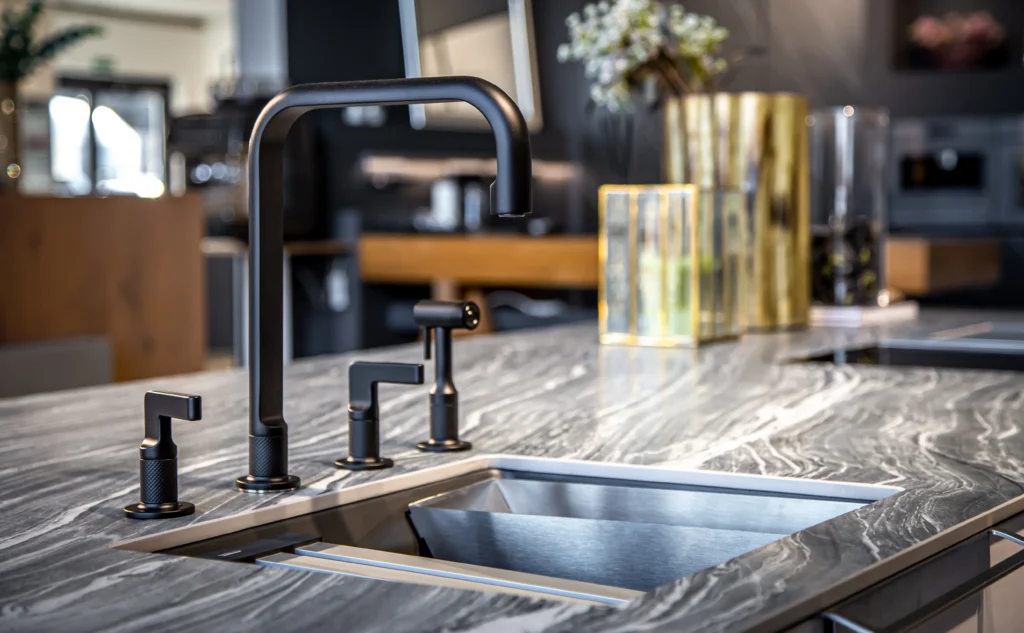
How to Clean Granite Countertops
Granite is a popular natural-stone countertop because of its durability and distinctive appearance. However, it still needs appropriate care.
For routine how to clean granite countertops maintenance:
- Remove crumbs and loose debris.
- Use a soft microfiber cloth dampened with warm water.
- Add a small amount of mild dish soap or use a cleaner specifically designed for natural stone.
- Wipe the entire surface.
- Remove any remaining residue with a clean damp cloth.
- Dry the countertop thoroughly.
Avoid abrasive scrubbers and cleaners that may damage the surface. Acidic substances can also be problematic for certain natural stones.
The Natural Stone Institute recommends understanding the specific type of stone before choosing cleaning products because natural stones have different compositions and care requirements.
If you’re considering granite for an upcoming remodel, take a look at Atlas’s guide to the best countertop materials for every kitchen.
How to Clean Quartz Countertops
Quartz countertops are engineered surfaces known for their durability and relatively straightforward maintenance. However, “low maintenance” doesn’t mean they are completely resistant to damage.
To clean kitchen countertops made from quartz:
- Remove loose crumbs and debris.
- Wipe the surface using warm water and a soft cloth.
- Use mild dish soap or a quartz-approved countertop cleaner when needed.
- Gently work on sticky or dirty areas.
- Rinse away cleaner residue.
- Dry the surface with a soft cloth.
Avoid harsh chemicals, highly acidic cleaners, and abrasive scrubbing tools unless the manufacturer specifically says they are safe.
For example, Caesarstone recommends using a soft cloth or non-abrasive cleaning material with warm water and mild detergent for its quartz surfaces and advises homeowners to use caution with chemicals that have very high or low pH levels.
How to Clean Marble Countertops
Marble creates a sophisticated look, but it requires more care than some other countertop materials. Because marble is susceptible to etching from acids, avoid using vinegar, lemon juice, or acidic household cleaners unless the specific manufacturer recommends them.
For routine how to clean marble countertops care:
- Wipe away crumbs and debris.
- Use a cleaner specifically formulated for natural stone or a mild soap-and-water solution.
- Wipe the countertop with a soft microfiber cloth.
- Remove residue with a clean damp cloth.
- Dry the surface.
Be particularly careful with acidic foods and drinks. Spills should be wiped up promptly rather than left sitting on the surface.
How to Clean Laminate Countertops
Laminate countertops are relatively easy to maintain, making them a practical choice for many kitchens.
Start by removing crumbs and debris. Then use a damp microfiber cloth with a mild, non-abrasive cleaner. Wipe the surface thoroughly and remove any remaining cleaning residue.
Avoid harsh abrasive powders, scouring pads, and excessive moisture. Water that repeatedly gets into seams or edges can potentially contribute to damage over time.
How to Clean Butcher Block Countertops
Butcher block requires a slightly different approach because the surface is made from wood.
For everyday cleaning:
- Remove food debris.
- Wipe the surface with a damp cloth and mild dish soap.
- Rinse the cloth and wipe away soap residue.
- Dry the countertop thoroughly.
Avoid soaking butcher block with water. Standing moisture can penetrate the wood and contribute to swelling or other damage.
Butcher block may also require periodic conditioning or oiling depending on the type of finish and the manufacturer’s recommendations. Always follow the care instructions associated with your particular countertop.
How to Clean Stainless Steel Countertops
Stainless steel is durable and commonly found in hardworking kitchens. However, it can show fingerprints, water spots, and scratches.
To clean kitchen countertops made from stainless steel:
- Remove loose debris.
- Apply an appropriate stainless-steel cleaner to a soft cloth.
- Wipe in the direction of the grain.
- Remove cleaner residue.
- Dry the surface thoroughly to minimize streaks and water spots.
Avoid abrasive scrubbers that could scratch the surface. Bleach and other harsh chemicals may also damage stainless steel, depending on the product and concentration.
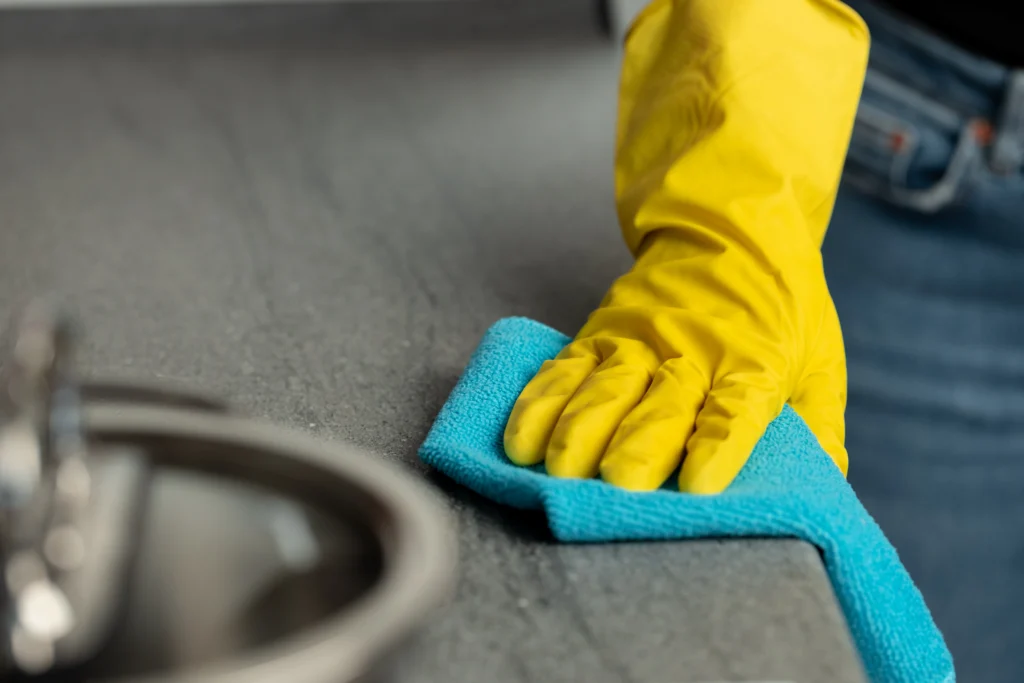
What Should You Avoid When Cleaning Kitchen Countertops?
Knowing what not to use is just as important as knowing what to use.
Avoid automatically reaching for strong household cleaners simply because they are effective on other surfaces. Countertops can react differently to chemicals, abrasives, excessive moisture, and heat.
Common things to avoid include:
- Abrasive scouring pads on surfaces that can scratch
- Harsh chemicals not approved for your countertop material
- Highly acidic cleaners on sensitive natural stone
- Excessive water around seams and edges
- Leaving cleaning products on the surface longer than directed
- Using the same dirty cloth repeatedly
- Cutting directly on the countertop
- Placing extremely hot cookware directly on surfaces that are not designed for it
The CDC also recommends reading disinfectant labels to make sure products are appropriate for the surface being treated and following the manufacturer’s directions, including required contact time.
Cleaning vs. Sanitizing: What’s the Difference?
It’s easy to use the terms “cleaning,” “sanitizing,” and “disinfecting” interchangeably, but they aren’t exactly the same.
Cleaning removes dirt, food residue, grease, and many germs from a surface.
Sanitizing reduces germs to a level considered safe.
Disinfecting is a stronger process intended to kill germs that remain on a surface after cleaning.
For normal household countertop maintenance, regular cleaning is often sufficient. The CDC notes that in most situations, cleaning with soap and water can remove most germs, while disinfection is generally more important when someone is sick or when a contaminated surface needs additional treatment.
Always check whether a disinfectant is appropriate for your particular countertop before using it. Some products that are effective at killing germs can damage certain materials.
How to Remove Stains From Kitchen Countertops
Stains can be frustrating, but the best solution depends on both the stain and countertop material.
Start with the least aggressive cleaning method. A soft cloth and mild cleaner should be your first choice rather than immediately scrubbing with a harsh product.
For a stubborn spot:
- Identify the countertop material.
- Check the manufacturer’s cleaning recommendations.
- Use a cleaner approved for that material.
- Apply it according to the product instructions.
- Use a soft cloth or non-abrasive tool.
- Rinse away residue.
- Dry the surface.
Don’t assume that a natural DIY solution is automatically safe. Vinegar, lemon juice, baking soda, bleach, and other common household products can be useful for certain cleaning jobs but may be inappropriate for specific countertop materials.
When in doubt, test a product in an inconspicuous location first or use a product specifically formulated for the surface.
Kitchen Countertop Maintenance Tips
Regular kitchen countertop maintenance can help your counters look better and potentially extend their useful life.
Keep these habits in your routine:
- Clean spills promptly. Don’t allow coffee, wine, oils, or acidic foods to sit unnecessarily.
- Use cutting boards. Even durable countertops can be scratched or damaged by knives.
- Use trivets. Protect surfaces from cookware that could cause heat damage.
- Keep cleaning cloths clean. A dirty cloth can simply spread food residue around.
- Follow manufacturer recommendations. The safest cleaning method depends on the material.
- Don’t over-clean with harsh products. Stronger does not necessarily mean better.
- Pay attention to seams. Avoid allowing water to sit around seams and edges.
- Keep the surrounding kitchen clean. Countertops are easier to maintain when crumbs, grease, and clutter aren’t constantly accumulating.
If your existing counters are difficult to maintain because of their age, condition, or material, cleaning may not be the only solution. Atlas Home Improvement can help you explore countertop options as part of a larger kitchen update.
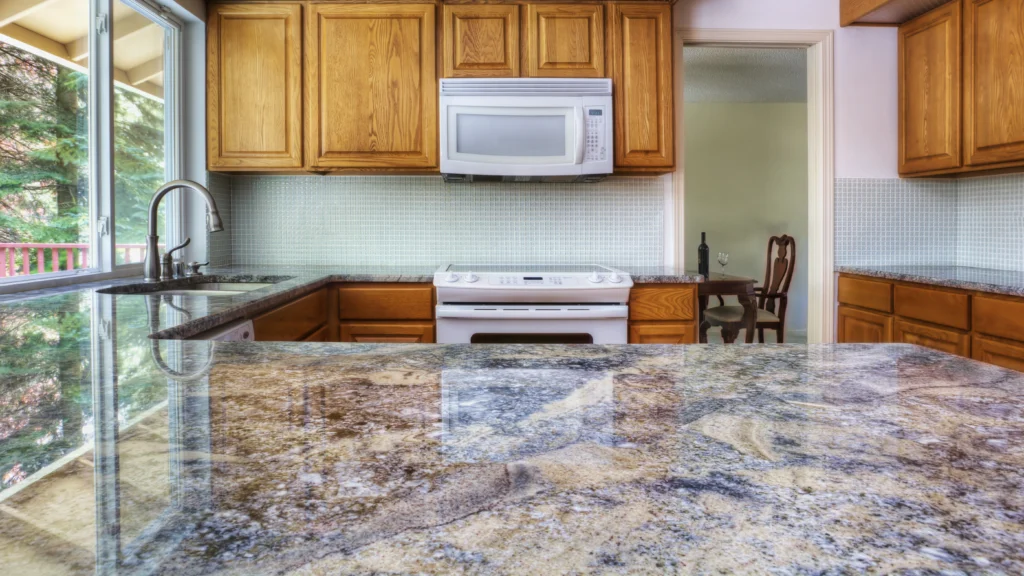
When Is It Time to Replace Your Kitchen Countertops?
Cleaning can improve the appearance of a countertop, but it can’t fix every problem.
Consider replacing your countertops if you notice:
- Persistent stains that cannot be removed
- Deep scratches or chips
- Cracks
- Significant discoloration
- Damaged or deteriorating seams
- Water damage around edges
- A surface that no longer fits your kitchen’s needs
- A countertop that is difficult to maintain despite regular care
Replacing the countertop can also be an opportunity to update the entire kitchen.
For more inspiration, check out Atlas’s Kitchen Remodeling: Step-by-Step Guide to Transform Your Kitchen before starting your project.
How Countertop Material Affects Cleaning and Maintenance
If you’re remodeling your kitchen, it’s worth thinking about maintenance before selecting a countertop.
Different materials offer different combinations of durability, appearance, heat resistance, stain resistance, and maintenance requirements. For example, homeowners who want a low-maintenance surface may prioritize different characteristics than someone who wants the natural variation of stone.
Atlas’s guide to choosing the best countertop materials breaks down several popular options and explains how factors such as maintenance, durability, heat resistance, and appearance can affect your decision.
Countertop dimensions matter, too. The right countertop height and depth can make food preparation and everyday kitchen tasks more comfortable.
A successful kitchen isn’t just about choosing a beautiful surface. It should work with your cabinets, backsplash, layout, storage, lighting, and daily habits.
Keep Your Kitchen Looking Its Best With Atlas Home Improvement
Knowing how to clean kitchen countertops can help protect your investment and keep your kitchen looking its best. The most important rule is simple: match your cleaning method to your countertop material. Mild cleaners, soft cloths, prompt spill cleanup, and manufacturer-approved products are generally safer than aggressive scrubbing or harsh chemicals.
But if your countertops have reached the point where cleaning isn’t enough, it may be time to consider an upgrade. Atlas Home Improvement has helped homeowners create more functional and beautiful kitchens with countertop, cabinet, backsplash, and other remodeling solutions. Explore Atlas’s kitchen remodeling services or learn more about granite countertops to start exploring your options. When you’re ready to discuss your project, contact Atlas Home Improvement or call 734-259-4374 to schedule a consultation.
Frequently Asked Questions About How to Clean Kitchen Countertops
What is the best way to clean kitchen countertops?
For many countertop materials, warm water, mild dish soap, and a soft microfiber cloth are a good starting point. However, always check the manufacturer’s recommendations because the safest cleaning method varies by material.
Can I use vinegar to clean kitchen countertops?
Vinegar is acidic and should not automatically be used on every countertop. It can damage or etch certain natural-stone surfaces, including marble. Check your countertop manufacturer’s care instructions before using vinegar.
How often should I clean kitchen countertops?
Most kitchens benefit from daily cleaning, especially after food preparation. Clean countertops whenever they become visibly dirty and take additional sanitizing precautions after contact with raw meat, poultry, or seafood.
How do I clean granite countertops?
Use warm water with mild dish soap or a cleaner specifically designed for granite and natural stone. Wipe with a soft cloth and dry the surface. Avoid abrasive products and cleaners that are not appropriate for natural stone.
How do I clean quartz countertops?
Use warm water and mild dish soap or a quartz-approved cleaner with a soft cloth. Avoid harsh chemicals and abrasive cleaning tools that could damage the surface.
Should I sanitize my kitchen countertops?
Sanitizing may be appropriate after preparing raw meat, poultry, or seafood or when contamination is a concern. Regular cleaning is generally sufficient for everyday household maintenance. Follow the instructions for any sanitizing product you use.
Can cleaning products damage countertops?
Yes. Some countertop materials can be damaged by abrasive cleaners, harsh chemicals, acidic products, or excessive moisture. Always use a cleaner appropriate for your specific countertop material.
Related Topics
- How to Clean Inside of Kitchen Cabinets: A Simple Step-by-Step Guide
- How to Choose the Right Height and Depth for Kitchen Countertops
- Best Countertop Materials for Every Kitchen