
How to Choose the Right Height and Depth for Kitchen Countertops
Kitchen countertops affect much more than the look of a remodeling project. Their height influences your posture and comfort, while their depth determines how easily you can reach the backsplash, use small appliances, prepare meals, and move through the room. A countertop that is attractive but poorly sized can leave you bending, reaching, or working around a crowded layout every day.
For most homeowners, standard dimensions are a reliable starting point. However, the right measurements should also reflect who uses the kitchen, what tasks happen there, the size of the room, the cabinetry and appliances, and whether the home should support aging in place.
Here is how to choose countertop dimensions that feel comfortable now and continue to work well for years.
Start With Standard Kitchen Countertop Dimensions
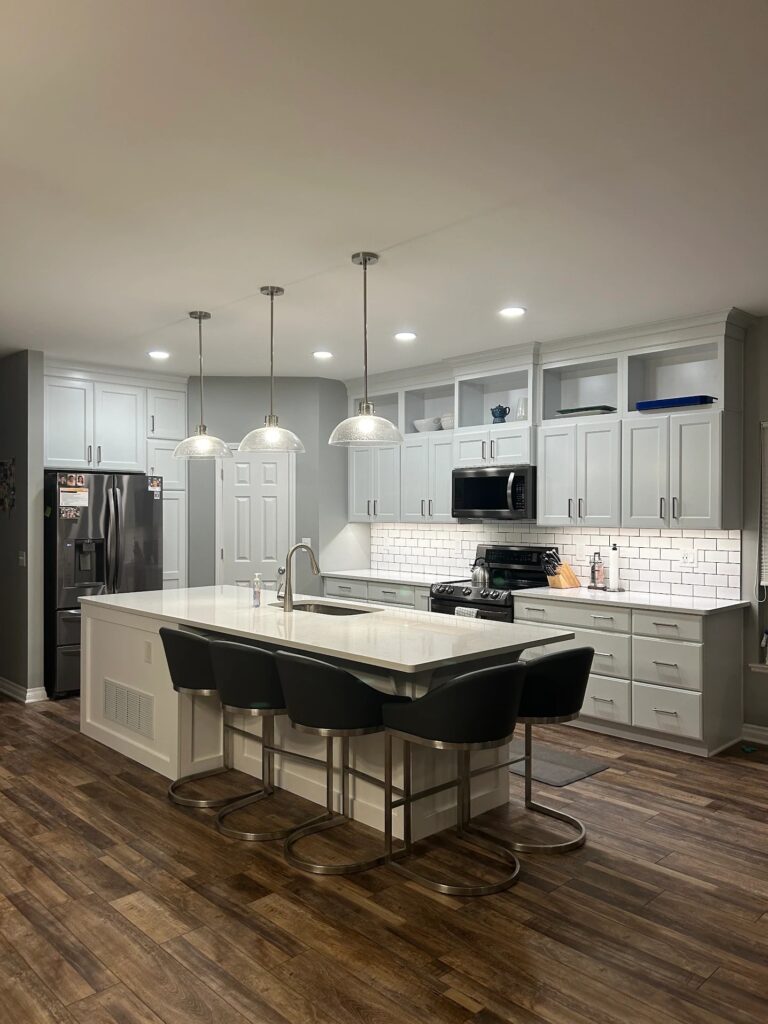
The standard kitchen countertop height is approximately 36 inches from the finished floor to the top of the work surface. This usually comes from a 34.5-inch base cabinet plus the thickness of the countertop. The standard depth for a perimeter kitchen countertop is about 25 to 25.5 inches. That generally covers a 24-inch-deep base cabinet and includes a small overhang at the front.
One terminology note can prevent confusion during planning: countertop depth is the front-to-back measurement. Countertop width or length generally describes how far the counter runs from side to side along a wall, peninsula, or island.
How to Choose the Right Countertop Height
Begin With the 36-Inch Standard
A 36-inch-high countertop is suitable for many common kitchen activities, including chopping, mixing, washing dishes, and loading the dishwasher. It also coordinates with commonly manufactured base cabinets, ranges, and dishwashers, which can simplify the design and reduce the need for custom work.
Test the Height Instead of Guessing
When planning a full kitchen remodel, test a few working heights before ordering cabinetry.
One practical method is to stand naturally, bend your elbow to approximately 90 degrees, and measure from the floor to your elbow. A work surface about two to four inches below that point often provides a comfortable position for general food preparation.
You can simulate the height by stacking sturdy boards or books on a table and trying typical kitchen motions, such as chopping, stirring, and kneading. As you test the surface, pay attention to your shoulders and lower back. If your shoulders rise while you work, the surface may be too high. If you repeatedly round your back or lean forward, it may be too low.
Consider the Primary Kitchen Users
Choose a countertop height based on the people who use the kitchen most. Taller or shorter homeowners may prefer a customized height, while shared kitchens often work best with standard counters and one specialized work area. Also consider children, older adults, and anyone with limited mobility.
Match Heights to Specific Tasks
Different tasks may benefit from different counter heights. A lower section can make baking, kneading, or using heavy appliances more comfortable, while a raised surface can serve as a beverage station or serving ledge. Multiple levels should always have a clear purpose.
Account for Cabinets, Flooring, and Countertop Thickness
Countertop height must be measured from the finished floor, not the subfloor.
New tile, luxury vinyl plank, hardwood, or underlayment can change the final relationship between the floor, cabinets, appliances, and countertop. Countertop thickness also matters. A thin surface installed over standard cabinets will finish lower than a thicker stone top or built-up decorative edge.
Before construction begins, confirm the following measurements together:
- Base cabinet and toe-kick height
- Countertop material and thickness
- Finished flooring height
- Dishwasher and range dimensions
- Sink installation method
- Any raised or lowered work areas
Coordinating these elements helps prevent problems such as a range sitting above the adjoining countertops, a dishwasher opening that is too tight, or counters that finish at different heights.
How to Choose the Right Countertop Depth
Use 25 to 25.5 Inches as the Perimeter Baseline
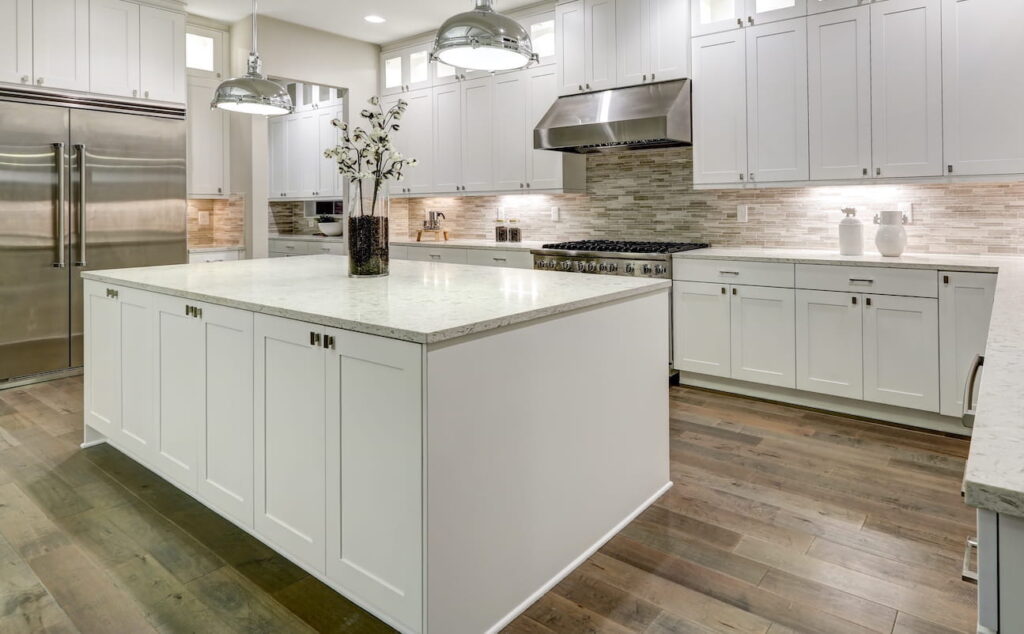
A standard 24-inch-deep base cabinet is generally paired with a countertop around 25 to 25.5 inches deep. The additional depth creates a front overhang that helps protect cabinet doors and drawer fronts from spills. It also makes the doors and drawers easier to operate while providing enough work area for many common countertop appliances.
This dimension works well in most conventional kitchen layouts, but existing kitchens should always be measured before materials are ordered.
Older cabinetry, uneven walls, applied backsplash materials, plumbing chases, and previous renovations can all affect the required depth. Even when the cabinets are standard, the finished countertop may need small adjustments to accommodate the actual room.
Choose a Deeper Counter When You Need More Workspace
A deeper countertop can provide extra prep space around appliances, large cutting boards, deep cabinets, or appliance garages. However, added depth may reduce aisle clearance and make items near the backsplash harder to reach or clean. Before committing, mark the proposed edge on the floor or extend the counter with cardboard to test both workspace and circulation.
Consider a Shallower Counter Only With a Clear Reason
A shallower countertop can improve circulation in tight kitchens, pantries, or accessible work areas, but it may reduce storage and limit sink or appliance options. Because standard cabinets and appliances are designed for common depths, a shallower layout may require custom solutions.
Plan the entire space carefully, since reducing counter depth will not fix obstructions caused by appliance doors or opposing cabinets.
Plan Island Height and Depth Around Its Purpose
Choose kitchen island dimensions based on how the space will be used. Common features include:
- Food preparation space
- A sink or cooktop
- Seating
- Storage
- Electrical outlets
- Space for serving or homework
A prep-only island can often remain at the standard 36-inch height and may be about 27 to 30 inches deep. Islands with seating, appliances, or back-to-back cabinets require more depth for storage, support, and legroom.
Common seating heights include:
- 30 inches: Table height
- 36 inches: Counter height
- 42 inches: Bar height
Avoid making the island so large that it reduces walkway space or makes the center difficult to reach and clean.
Include Accessibility and Aging-in-Place Needs
Countertop height and layout should reflect the needs of anyone with limited mobility or reach. While ADA standards do not automatically apply to private homes, they can provide useful design guidance.
Accessible kitchen features may include:
- A lowered preparation station
- Open knee space beneath the counter
- Pull-out shelves and drawers
- Frequently used storage within easy reach
- Front-mounted appliance controls
- An adjustable-height work surface
- A pull-under sink or cooktop area
These features should be planned with an experienced designer or contractor to ensure proper clearance, support, and safe plumbing or appliance placement.
Countertop Heights, Home Value, and ROI
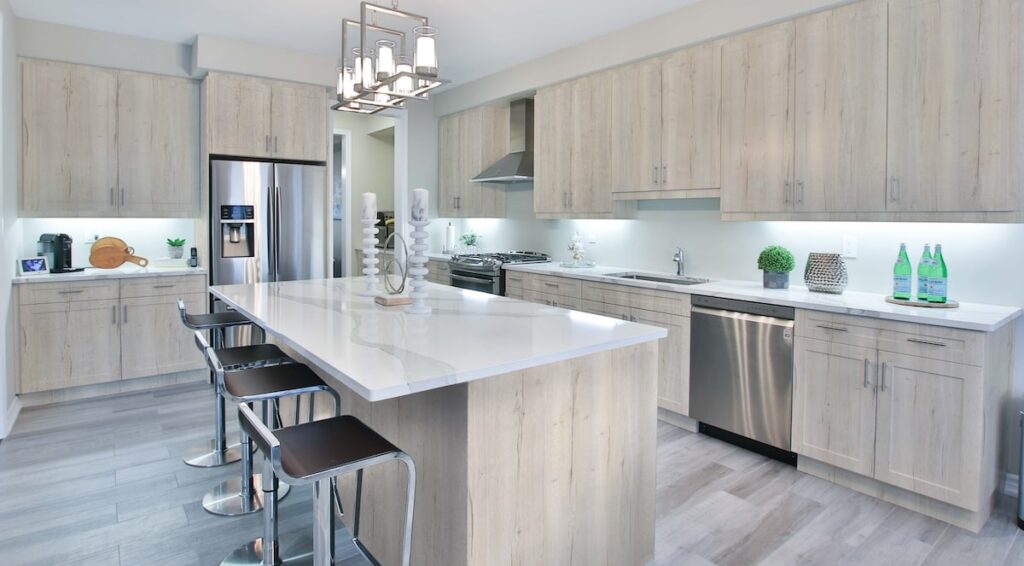
To put it simply, well-designed countertops increase home value.
- According to the National Association of Realtors, kitchen and bathroom upgrades are among the highest-ROI remodels, with homeowners recouping around 70–80% at resale.
- Ergonomic, functional countertops make homes more attractive to buyers.
- ADA-compliant or multi-level counters broaden appeal to a wider market.
Avoid Common Countertop-Sizing Mistakes
| Common Mistake | Why It Matters | What to Do Instead |
| Relying only on standard dimensions | Standard sizes may not suit the height, reach, or needs of everyone using the kitchen. | Consider the primary users and how they cook, clean, and move through the space. |
| Measuring from an unfinished floor | New flooring can change the final countertop height. | Measure from the finished floor and include the countertop thickness. |
| Making an island too deep | An oversized island can reduce aisle space and make the center difficult to reach. | Check walkway clearance and test the proposed footprint before installation. |
| Adding seating without enough legroom | Limited knee space can make island seating uncomfortable. | Plan the overhang, support, stool size, and seating height together. |
| Choosing a custom height too early | Appliances may not align properly with nonstandard countertops. | Confirm the dimensions of ranges, dishwashers, sinks, and cabinets first. |
| Skipping final field measurements | Walls and cabinet runs are not always level, straight, or square. | Verify all measurements before fabrication, including overhangs, cutouts, backsplash thickness, and appliance openings. |
Choose a Countertop Height That Fits the Way You Live
For many kitchens, a 36-inch height and a 25- to 25.5-inch perimeter depth remain the best starting point.
Atlas Home Improvement helps homeowners in Ann Arbor and throughout Southeast Michigan create kitchens that balance style with everyday function. Its kitchen remodeling services include countertops, cabinets, islands, storage, and layout improvements, allowing these important decisions to be coordinated as part of one complete design.
Frequently Asked Questions About Countertop Height and Depth
What is the standard countertop height and depth?
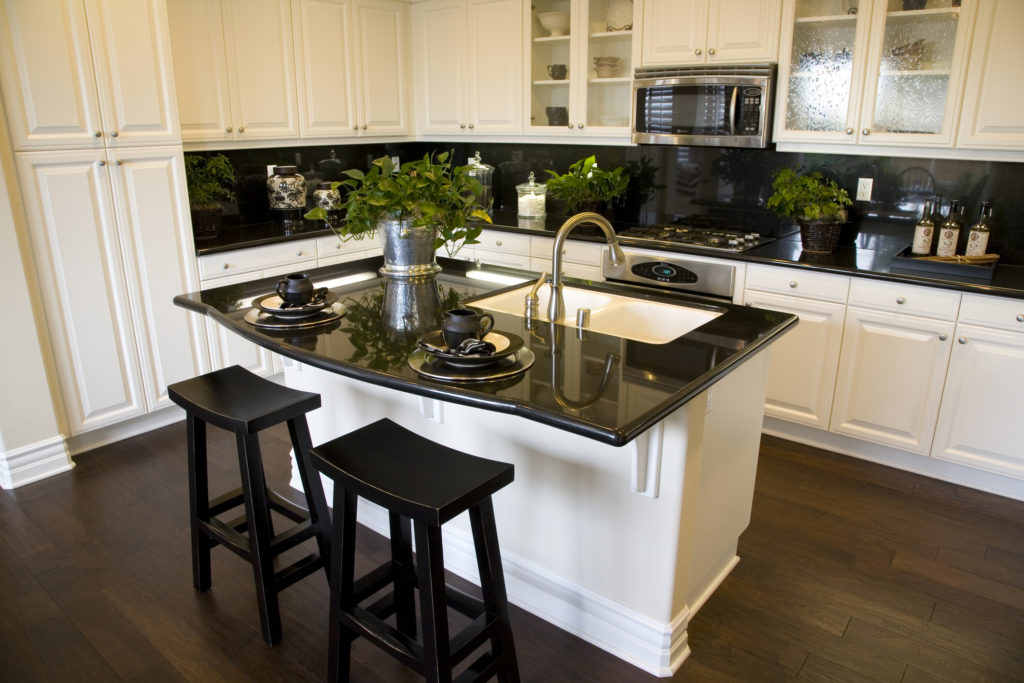
Most kitchen countertops are about 36 inches high and 25 to 25.5 inches deep.
Can countertop height be customized?
Yes. Countertops can be raised or lowered to better suit the height, mobility, and comfort of the people using the kitchen.
How do I test countertop height?
A comfortable prep surface is often two to four inches below your bent elbow. Test the height with sturdy books or boards before ordering cabinets.
When is a deeper countertop helpful?
Extra depth can provide more room for appliances and food preparation, but it may reduce aisle space and make the backsplash harder to reach.
How deep should a kitchen island be?
Island depth depends on whether it includes seating, storage, appliances, or a sink. It should also leave enough room for comfortable walkways.
When should countertops be measured?
Final measurements should be taken after the cabinets are installed and the flooring, appliances, backsplash, and countertop material are confirmed.
Related Topics
- The Ultimate Guide to a Kitchen Remodel
- Tips for Installing a Kitchen Island: Design, Layout & More
- How to Remove Tile Backsplash and Choose a Better Design for Your Kitchen
- Kitchen Remodeling: Step-by-Step Guide to Transform Your Kitchen
- How to Clean Kitchen Countertops: A Complete Guide for Every Surface
- Cabinet Refacing vs. Refinishing: Which Kitchen Update Makes More Sense?