
How to Make Light Wood Cabinets Work in Your Kitchen
Light wood cabinets can completely change the mood of a kitchen.
Instead of the crisp uniformity of all-white cabinetry or the visual weight of darker finishes, they introduce warmth, grain, and natural character. Done well, a light wood cabinet kitchen design can feel bright without feeling stark, contemporary without feeling cold, and inviting without becoming overly rustic.
The challenge is that light wood isn’t one color. Some finishes lean golden, beige, creamy, gray, or even slightly pink, and the same cabinet can look very different beside cool quartz, warm flooring, black hardware, or changing natural light.
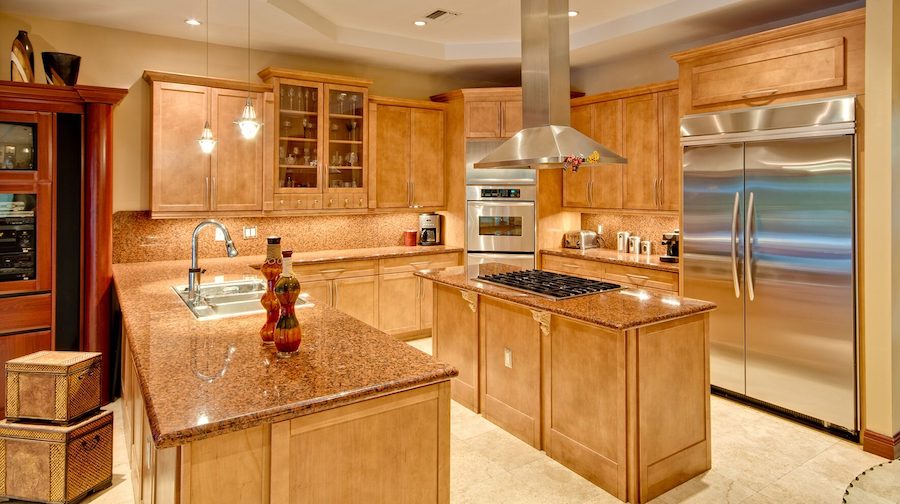
That means a successful kitchen isn’t created by choosing attractive cabinets in isolation. It’s created by understanding how the entire room will work around them.
Since 1989, Atlas Home Improvement has helped homeowners across Michigan plan kitchens around both appearance and everyday function. If you’re considering light wood cabinetry, these design decisions can help you create a kitchen that feels cohesive rather than simply trendy.
Ready to turn your ideas into a kitchen that works beautifully together? Call Atlas Home Improvement at 734-344-4788 today or contact us online to start planning your remodel.
Why Are Light Wood Kitchen Cabinets So Appealing?
Light wood sits in a useful design middle ground.
It brings natural warmth into the room while maintaining much of the brightness homeowners often want from lighter cabinetry. Depending on the door style and surrounding finishes, it can work well in contemporary, transitional, Scandinavian-inspired, organic-modern, and more traditional kitchens.
The National Kitchen & Bath Association has also highlighted nature-inspired design, lighter wood tones, natural materials, and warmer neutrals as important kitchen design preferences.
But versatility doesn’t mean every combination works equally well. The key is balancing coordination with enough contrast to keep the kitchen from looking flat.
Start With the Undertone of the Wood
Before choosing countertops, backsplash, paint, or flooring, identify the cabinet undertone.
A light cabinet finish might lean:
- Warm yellow or honey
- Creamy beige
- Neutral tan
- Soft gray-brown
- Slightly pink or reddish
These undertones affect nearly every other material choice.
A creamy countertop may look seamless beside warm cabinetry but unexpectedly yellow beside a cooler finish. Likewise, a blue-gray backsplash might create attractive contrast against warm oak or make cooler wood feel washed out.
You don’t have to match every undertone exactly. Instead, look for compatibility.
Whenever possible, compare cabinet, countertop, flooring, and tile samples together under the lighting conditions they’ll actually experience in your home.
Don’t Assume All Light Wood Cabinets Look Alike
“Light wood” covers a wide range of appearances.
Wood species, veneers, stains, finishes, grain patterns, and manufactured wood-look products can all affect the final result.
The U.S. Forest Service notes that wood species naturally vary in characteristics such as color and grain, and finishes can further influence appearance. Wood can also change color over time with exposure to light.
That variation can be part of the appeal.
If you want a very uniform look, ask how much natural variation to expect. If you prefer more organic character, visible grain and tonal differences can become an intentional part of the design.
What Countertops Look Best With Light Wood Cabinets?
Countertops are one of the easiest places to establish contrast.
Light Countertops for an Airy Look
White, cream, and pale neutral countertops can create a soft, open appearance.
To keep the room from blending together, look for subtle veining, gentle movement, or a slightly different tone from the cabinetry.
Darker Countertops for More Definition
Charcoal, deep gray, black, or darker stone-inspired surfaces can give light cabinets stronger visual structure.
This can work especially well in modern kitchens where you want clean lines to stand out.
You don’t necessarily need a dramatic black-and-white contrast. Even a medium-tone surface can provide enough definition.
If you’re planning a broader kitchen remodel, choose cabinets and countertops together rather than selecting one and trying to make the other fit later.
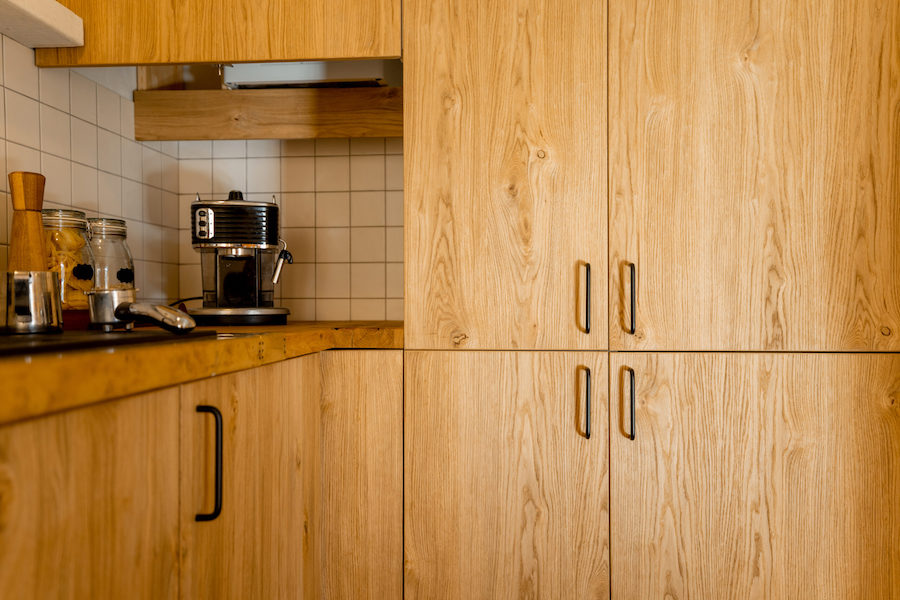
Should the Backsplash Blend In or Stand Out?
Both approaches can work.
A quiet backsplash lets the wood grain take center stage. A stronger color or pattern adds more personality.
For a softer look, consider warm white, cream, beige, or lightly textured tile.
For more contrast, consider deep green, muted blue, charcoal, stronger veining, or patterned tile.
The most important thing is to treat the backsplash, countertop, and cabinetry as one visual composition instead of three separate choices.
Be Careful Pairing Light Wood Cabinets With Wood Flooring
Wood cabinets and wood flooring can create a warm, layered kitchen, but they don’t need to match exactly.
In fact, trying to make them nearly identical can make small color differences more obvious.
Instead, consider:
- Clear contrast: Pair light cabinets with noticeably darker wood floors.
- Related undertones: Keep the warmth similar while changing the depth.
- A non-wood floor: Use tile or another material so the cabinetry becomes the primary wood element.
If you’re replacing the floor, compare kitchen flooring samples directly against the cabinet finish before making a final decision.
Add Enough Contrast to Keep the Kitchen Interesting
A light kitchen still needs visual anchors.
If the cabinets, counters, flooring, and walls all fall into the same pale range, the room can start to feel washed out.
Contrast can come from:
- Darker hardware
- A contrasting island
- Statement lighting
- Richer backsplash colors
- Medium-tone countertops
- Metal accents
- Stronger wall colors
A kitchen island can be especially useful because it creates a natural place for a contrasting finish without breaking up the entire kitchen.
Let Hardware Support the Overall Mood
Light wood works with several hardware finishes, but each creates a different effect.
Black hardware adds stronger contrast and can make the kitchen feel more contemporary.
Brass or warm metals can emphasize golden undertones and create a warmer look.
Nickel or stainless finishes often feel quieter and can coordinate easily with appliances.
Rather than choosing hardware because it’s popular, decide whether you want it to blend in or become a visible design feature.
Lighting Can Change How the Cabinets Look
Cabinet color doesn’t exist independently from lighting.
Daylight, recessed lights, pendants, and under-cabinet fixtures can all change how warm, cool, light, or saturated the wood appears. A thoughtful kitchen lighting plan should include multiple layers.
Before finalizing a finish, look at your cabinet sample in morning light, evening light, and under the artificial lighting you’ll use most often.
Light Wood Cabinets Can Work in Small Kitchens
Light cabinetry can be especially appealing in smaller kitchens because it tends to feel less visually heavy than darker finishes.
But color alone won’t solve a cramped or inefficient layout.
If you’re working with limited square footage, a small kitchen remodel should still prioritize storage, traffic flow, countertop space, appliance placement, and accessibility.
The cabinet finish can support a sense of openness, but function has to come first.
Don’t Forget What’s Staying
Not every kitchen remodel starts from scratch.
You may be keeping:
- Hardwood floors
- Stainless appliances
- Existing countertops
- Nearby trim or millwork
- Adjacent furniture
- Wall colors
These features should influence the cabinet finish.
This matters especially in an open kitchen layout, where the cabinetry may be visible from nearby living and dining areas.
Step back and evaluate the kitchen from adjoining spaces, not just from directly in front of the cabinets.
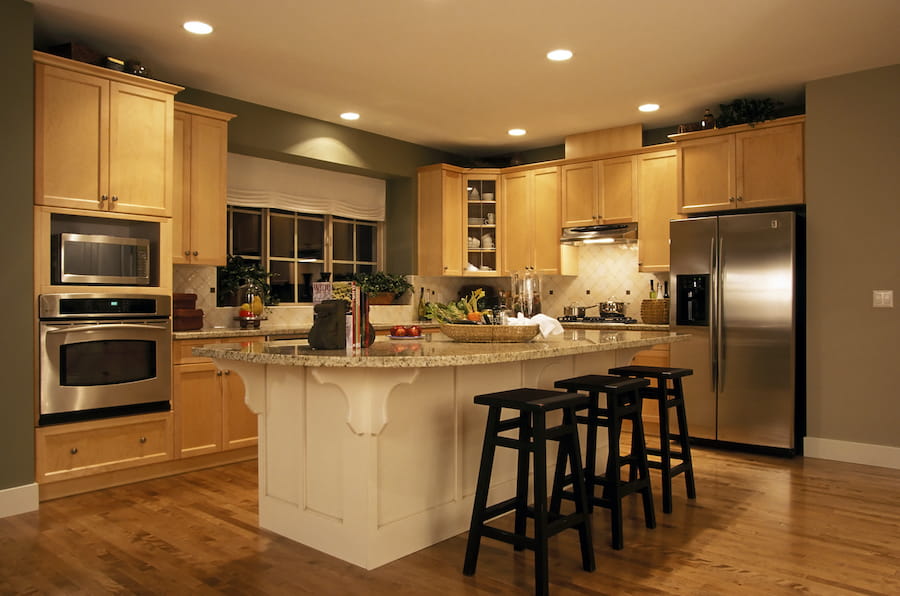
Should Every Cabinet Be Light Wood?
Not necessarily.
Two-tone cabinetry can add depth and prevent the kitchen from feeling too uniform.
Light wood might be used on:
- Perimeter cabinets with a painted island
- An island with painted perimeter cabinetry
- Lower cabinets with lighter uppers
- A pantry or appliance wall
- A beverage station
The goal is restraint. Too many cabinet colors, woods, metals, and tile patterns can make the room feel fragmented.
Choose a small group of materials and repeat them consistently.
Think Beyond Today’s Trends
Light wood cabinetry may feel current, but a kitchen remodel should serve you much longer than a trend cycle.
Before committing, ask:
- Do I actually like visible wood grain?
- Will this finish work with the materials I’m keeping?
- Does the cabinet style suit the rest of my home?
- Am I comfortable with natural variation?
- Can I update the look later through hardware, paint, or accessories?
- Does the kitchen function as well as it looks?
The last question matters most.
NKBA’s planning guidance emphasizes activity zones, storage, lighting, accessibility, material performance, and building-system coordination—reinforcing that a successful kitchen is about far more than its color palette.
Why Choose Atlas Home Improvement for Your Kitchen Remodel?
At Atlas Home Improvement, we know a successful kitchen remodel is about more than choosing attractive cabinets. Every finish, fixture, and layout decision needs to work together to create a space that feels cohesive, functional, and built around the way you live.
We’re a family-owned and operated company, and we’ve been serving local homeowners since 1989. Over the years, we’ve built our reputation on delivering an exceptional remodeling experience from the first conversation through the final installation.
When you work with us, you can expect:
- Top-of-the-line products selected for lasting performance
- Expert installation by our in-house remodeling specialists
- Clear communication throughout the entire project
- Honest, reliable service from start to finish
- A strong focus on long-term value and complete customer satisfaction
Because we offer cabinetry, countertops, backsplashes, flooring, lighting, islands, and accessibility-focused remodeling, we can help you look at the kitchen as one complete design—not a series of disconnected upgrades.
Whether you’re drawn to light wood cabinets or still comparing styles, our team can help you bring every element together with confidence.
Bring Your Light Wood Kitchen Design Together
A successful light wood kitchen isn’t built around one cabinet sample. It’s built by making every element in the room work together.
The wood undertone should complement the countertops. Flooring should create harmony without blending into the cabinetry. Lighting should bring out the finish you chose, while hardware and backsplash add enough contrast to give the room depth.
Just as important, the kitchen still needs to work beautifully for everyday life. Storage, circulation, prep space, and accessibility should support how you cook, gather, and move through the room.
When those pieces come together, light wood cabinets can create a kitchen that feels warm, natural, polished, and lasting—not simply current.
Ready to move from inspiration to a finished kitchen? Call Atlas Home Improvement at 734-344-4788 today or contact us online and let our team help you bring the cabinetry, finishes, lighting, and layout together in one cohesive design.
FAQ: Light Wood Kitchen Cabinets
Q: What colors go best with light wood kitchen cabinets?
Light wood cabinets work well with warm whites, creams, soft grays, muted greens, taupes, and deeper accent colors. The best choice depends on the wood’s undertone, so compare paint, backsplash, and countertop samples directly against the cabinet finish before deciding.
Q: What countertops look best with light wood cabinets?
Both light and dark countertops can work. White, cream, and pale neutral surfaces create a softer, airier look, while charcoal, deep gray, or darker stone-inspired finishes add stronger contrast and definition.
Q: Do light wood cabinets make a kitchen look bigger?
Light wood cabinets can make a kitchen feel less visually heavy than darker cabinetry, which may help support a brighter, more open look. However, layout, lighting, storage, and countertop space have a much bigger impact on how spacious the kitchen feels overall.
Q: What flooring works with light wood kitchen cabinets?
Wood flooring can pair beautifully with light wood cabinets, but it usually looks more intentional when there is a clear difference in tone or depth. Tile and other non-wood flooring can also create useful contrast and let the cabinetry stand out.
Q: Can you mix light wood cabinets with a different color island?
Yes. A contrasting island can add depth and keep a light wood kitchen from feeling too uniform. Painted finishes, darker wood tones, or deeper neutrals can all work depending on the countertops, flooring, and surrounding finishes.
Q: What hardware looks best with light wood cabinets?
Black hardware creates crisp contrast, brass and warm metals can emphasize golden undertones, and nickel or stainless finishes tend to feel quieter and more understated. The best choice depends on whether you want the hardware to stand out or blend into the overall design.
Q: Are light wood cabinets good for small kitchens?
They can be a strong option for smaller kitchens because they often feel lighter and less visually dominant than dark cabinetry. For the best result, pair them with good lighting, efficient storage, and a layout that makes the most of limited space.
Q: How do you keep a light wood kitchen from looking too plain?
Add contrast through hardware, backsplash, countertops, lighting, an island, wall color, or decorative accents. The goal is to create enough variation that the room feels layered without introducing so many materials that the design becomes busy.
Q: Are light wood kitchen cabinets a passing trend?
Light wood cabinets are popular, but natural wood has been used in kitchens for generations. Their staying power depends less on the trend itself and more on choosing a door style, finish, and overall design that suit the architecture of your home and your personal preferences.
Related Topics