
Countertop Edge Profiles: Which Should You Choose?
When planning a kitchen remodel, countertops are one of the biggest design decisions you’ll make. You’ll need to consider the material, color, thickness, durability, maintenance, and of course, countertop edge profiles. While the edge may seem like a small detail, it can have a noticeable impact on the overall appearance and feel of your kitchen.
The right edge profile can make a countertop look sleek and contemporary, add traditional character, or create a softer appearance around busy areas. If you’re planning a kitchen update, Atlas Home Improvement’s kitchen remodeling team can help you coordinate your countertops with your cabinets, backsplash, layout, and other finishes.Contact Atlas Home Improvement or call 734-344-4788 to discuss your project and countertop options.
In this guide, we’ll explain the most popular countertop edge profiles, how they differ, and how to choose the best option for your kitchen.
What Are Countertop Edge Profiles?
A countertop edge profile refers to the shape and finish of the exposed edge of your countertop. Instead of simply having a straight, squared-off edge, homeowners can choose from several shapes that change the countertop’s appearance.
The edge profile you choose can affect:
- The overall style of your kitchen
- How substantial the countertop looks
- How well the countertop coordinates with your cabinets
- How noticeable chips or wear may be
- How easy the edge is to clean
- The appearance of a kitchen island
- The amount of decorative detail in the room
Because countertop edges are part of the finished surface, it’s best to consider them alongside your countertop material rather than treating them as an afterthought.
If you’re still comparing materials, take a look at Atlas’s guide to the best countertop materials for every kitchen before selecting an edge.
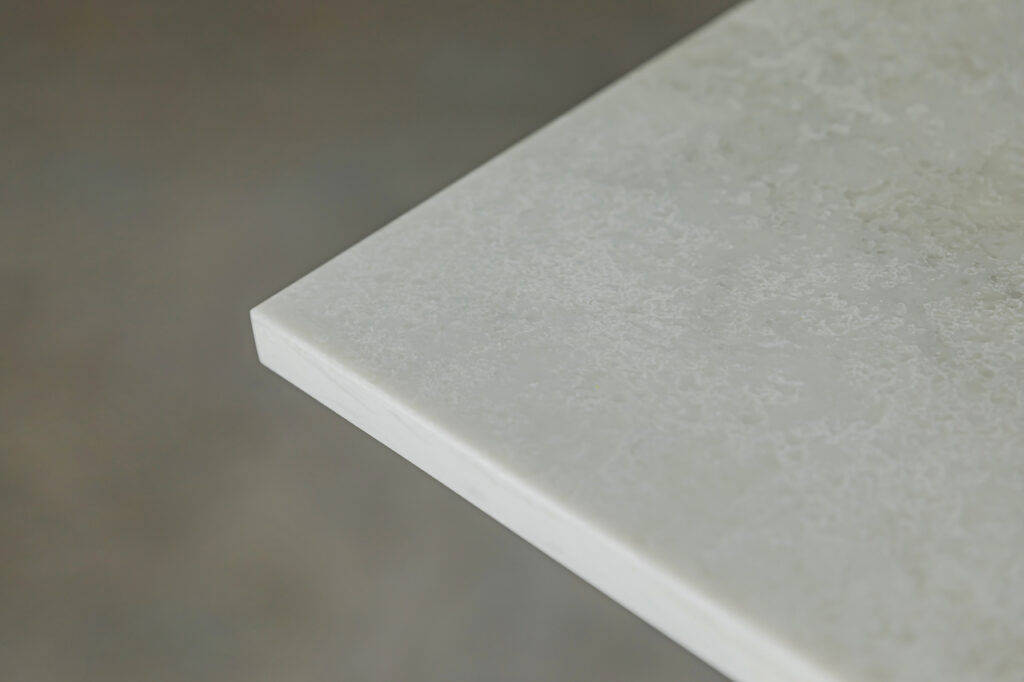
Popular Countertop Edge Profiles
There are many variations available, but several countertop edge profiles are especially common in residential kitchens.
1. Eased Edge
An eased edge is one of the simplest options. Rather than leaving the countertop completely sharp at the corner, the edge is slightly softened.
This creates a clean, understated appearance that works particularly well in contemporary and transitional kitchens.
Best for:
- Modern kitchens
- Minimalist designs
- Transitional kitchens
- Homeowners who prefer simple details
- Kitchens with heavily patterned countertops
An eased edge is also a good choice when you want the countertop material itself—rather than the edge—to be the main visual feature.
2. Bullnose Edge
A bullnose edge has a rounded profile that creates a softer appearance than a straight or eased edge.
A full bullnose is rounded across much or all of the exposed edge, while a half bullnose has a more gradual curve.
Bullnose profiles can work especially well in traditional kitchens or spaces where you want the countertop to have a softer appearance.
Consider a bullnose if you want:
- A classic appearance
- Soft, rounded lines
- A countertop that feels less angular
- A traditional or transitional kitchen design
3. Beveled Edge
A beveled edge features an angled cut along the top edge of the countertop.
The angle creates a subtle design detail without being as decorative as some ornate profiles. Depending on the size of the bevel, it can range from understated to more noticeable.
Beveled edges can work well in contemporary, transitional, and traditional kitchens.
4. Ogee Edge
An ogee edge is one of the more decorative countertop edge profiles. It typically features a curved, flowing shape that creates a more traditional or formal appearance.
This profile can be particularly effective in kitchens with:
- Traditional cabinetry
- Decorative millwork
- Detailed backsplashes
- Classic hardware
- Other ornate design elements
Because an ogee edge is visually distinctive, it may be best used when you want the countertop to contribute significantly to the kitchen’s overall style.
5. Demi Bullnose or Half Bullnose
A demi bullnose, sometimes called a half bullnose, creates a rounded transition from the countertop surface toward the bottom of the edge.
It offers some of the softness of a bullnose without the same fully rounded appearance.
This can be a good middle ground if you want an edge with more character than an eased profile but less decoration than an ogee.
6. Waterfall Edge
A waterfall edge is commonly used on kitchen islands. Instead of stopping at the edge of the countertop, the material continues vertically down the side of the island.
This creates a continuous appearance and can make the island a major focal point.
Waterfall edges can be especially effective with stone or stone-look materials that have patterns worth displaying along the side of the island.
If you’re considering a larger island renovation, Atlas’s guide to kitchen island design and installation can help you think through layout, seating, prep space, and materials.
7. Mitered Edge
A mitered edge can create the appearance of a much thicker countertop by joining pieces of material together at an angle.
This style is often used when homeowners want a substantial, high-end appearance without simply using an extremely thick slab.
Mitered edges can be particularly effective on kitchen islands, where the countertop edge is highly visible.
How Do You Choose the Right Countertop Edge Profile?
There isn’t one countertop edge profile that’s best for every kitchen. The right choice depends on several factors.
Consider Your Kitchen Style
Start by looking at the overall design of your kitchen.
For example:
| Kitchen Style | Edge Profiles to Consider |
| Modern | Eased, beveled |
| Contemporary | Eased, beveled, mitered |
| Transitional | Eased, demi bullnose, beveled |
| Traditional | Bullnose, ogee, demi bullnose |
| Farmhouse | Eased, bullnose, demi bullnose |
| Luxury/Formal | Ogee, mitered, waterfall |
These aren’t strict rules. The goal is to create a combination where the countertop, cabinetry, backsplash, flooring, and hardware feel intentional together.
Atlas’s article on Shaker cabinets is another helpful resource when you’re thinking about how cabinet style and countertops can work together.
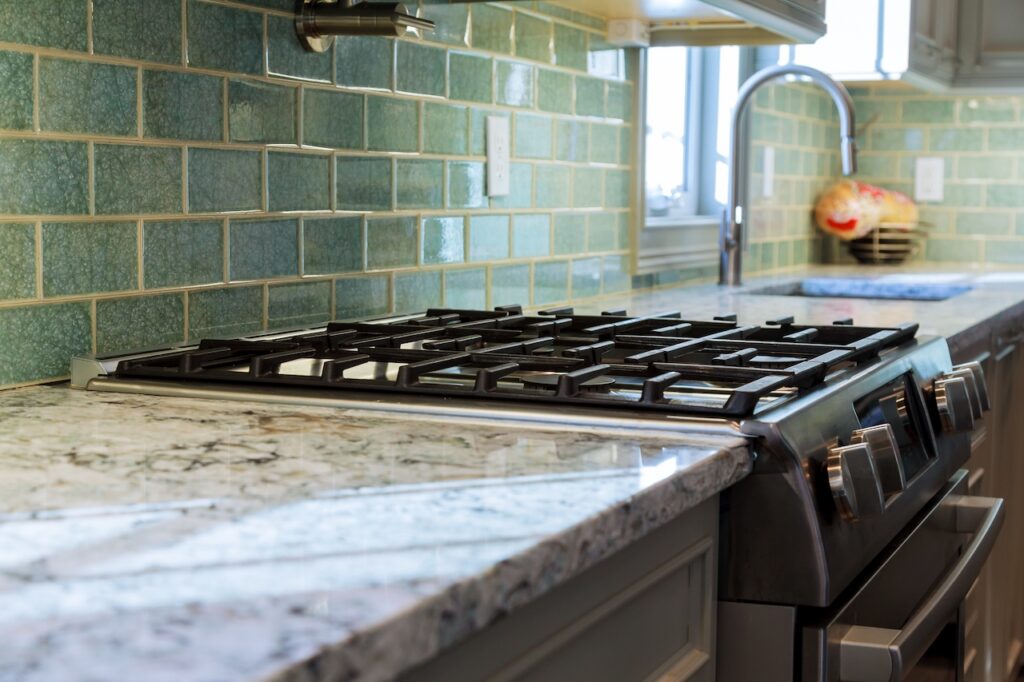
Think About the Countertop Material
The material you choose can influence which edge profile looks best.
Granite, quartz, and other countertop materials can have very different colors, patterns, textures, and visual characteristics. A heavily patterned countertop may look better with a simple edge, while a relatively subtle surface may allow you to introduce more decorative detail.
When comparing materials, think about:
- Durability
- Appearance
- Maintenance
- Stain resistance
- Scratch resistance
- Heat considerations
- Color and pattern
- Edge profile options
Match the Edge to the Countertop Thickness
Countertop thickness can also affect how an edge profile looks.
A very decorative edge may look different on a thinner countertop than it does on a thicker surface. Likewise, a simple eased edge can emphasize the clean lines of a substantial countertop.
Before choosing your edge, consider the countertop’s actual thickness and how much of the edge will be visible.
For more information about planning your countertop dimensions, see Atlas’s guide to choosing the right height and depth for kitchen countertops.
Consider How Much Maintenance You Want
Some countertop edge profiles contain more curves, grooves, or decorative details than others. Those details can affect how easily you can wipe down the edge.
For a busy household, a simple profile may be appealing because it offers fewer contours where crumbs and residue can collect.
No matter which profile you select, proper countertop care matters. Atlas’s guide to how to clean kitchen countertops explains why cleaning methods should be tailored to the countertop material.
Think About Safety and Everyday Use
Your kitchen countertop is a working surface, not just a decorative feature.
If you have young children, a rounded profile may be worth considering for areas where people frequently walk or gather. Islands, breakfast bars, and high-traffic areas deserve particular attention because their edges are often at the center of everyday activity.
Your household’s routines should play a role in the decision just as much as aesthetics.
Should Your Kitchen Island Have a Different Edge?
Your kitchen island doesn’t necessarily need a different countertop edge profile from the rest of the kitchen, but it can be an opportunity to introduce additional design detail.
Because an island is often one of the most visible features in a kitchen, homeowners may choose:
- A waterfall edge
- A mitered edge
- A thicker-looking edge
- A decorative edge
- A contrasting countertop material
For example, a simple eased edge might be used throughout the perimeter countertops while a waterfall edge makes the island the room’s focal point.
The best choice depends on the island’s size, layout, seating arrangement, and relationship to the rest of the kitchen.
How Countertop Edges Fit Into a Complete Kitchen Remodel
Choosing a countertop edge should happen as part of the larger kitchen design process.
Cabinets, countertops, backsplashes, lighting, flooring, appliances, and hardware all contribute to the finished appearance.
Atlas’s step-by-step kitchen remodeling guide recommends considering countertops alongside other major kitchen decisions rather than selecting each feature independently.
A coordinated design can help prevent one element from overwhelming the room.
For example:
- Bold cabinets may pair well with a simpler countertop edge.
- A dramatic countertop may benefit from a minimal edge.
- Traditional cabinets can complement a more decorative profile.
- A large island may provide an opportunity for a waterfall or mitered edge.
- Simple cabinetry can allow the countertop to become a stronger focal point.
Government Guidance to Keep in Mind During a Remodel
Countertop selection is primarily a design decision, but a kitchen renovation involves more than appearances.
The U.S. Environmental Protection Agency recommends paying attention to indoor air quality during remodeling and addressing ventilation, moisture, dust, and other potential pollutants. A kitchen remodel can also be an opportunity to evaluate ventilation and other aspects of the room’s overall function. EPA guidance on remodeling and indoor air quality provides additional information for homeowners.
If your project involves cutting, finishing, or installing natural or engineered stone, the National Institute for Occupational Safety and Health (NIOSH) also provides information about respirable crystalline silica exposure associated with countertop work. NIOSH’s countertop silica safety guidance is a useful government resource for understanding why appropriate safety practices matter during fabrication and installation.
These considerations are another reason to work with experienced professionals when your project involves countertop fabrication or installation.
Plan Your Kitchen Remodel With Atlas Home Improvement
Countertop edge profiles may seem like a small design decision, but they can make a meaningful difference in the finished appearance of your kitchen. From simple eased edges to decorative ogee profiles and dramatic waterfall islands, the right choice depends on your style, countertop material, and how you use your kitchen.
If you’re planning a kitchen update in Michigan, Atlas Home Improvement can help you coordinate your countertops, cabinets, and backsplashes as part of a complete remodeling project.
Ready to start planning your kitchen remodel? Contact Atlas Home Improvement or call 734-344-4788 to discuss your project and countertop options.
FAQ: Countertop Edge Profiles
What Is the Most Popular Countertop Edge Profile?
The eased edge is one of the most versatile choices because its simple appearance works with many kitchen styles and countertop materials.
However, popularity shouldn’t be the only factor in your decision. Your kitchen’s cabinetry, countertop material, overall design, and everyday use should all influence the profile you select.
What Is the Most Timeless Countertop Edge?
Simple profiles tend to have lasting appeal because they don’t depend heavily on a particular design trend.
An eased, beveled, or gently rounded edge can work across a range of kitchen styles and can make it easier to update other elements of the room later.
If you’re planning a kitchen remodel, it’s worth choosing an edge you expect to enjoy for many years rather than selecting one simply because it’s currently popular.
Are Rounded Countertop Edges Better?
Rounded edges aren’t automatically better, but they can be a practical option for certain kitchens.
A rounded profile can create a softer appearance and may be appealing in areas where people frequently move around the countertop, such as an island.
However, the best profile depends on your household, kitchen layout, countertop material, and preferred design style.
Does the Countertop Edge Affect Cost?
It can. More elaborate countertop edge profiles may require additional fabrication compared with a simple eased edge.
The exact cost depends on the countertop material, fabricator, amount of countertop, profile selected, and complexity of the project.
If you’re comparing countertop options as part of a larger renovation, getting a project-specific estimate is the best way to understand how your selections affect the overall budget.
Can You Change a Countertop Edge Profile Later?
Generally, changing an edge profile after the countertop has been fabricated and installed is not as straightforward as selecting the profile during the design stage.
Some modifications may be possible depending on the material and existing installation, but homeowners should discuss their options with a qualified countertop professional before assuming a profile can be changed.
That’s why it’s helpful to finalize the edge profile while you’re selecting the countertop itself.
How Do I Choose the Best Countertop Edge Profile?
The best countertop edge profile is the one that balances your kitchen’s style, countertop material, thickness, maintenance needs, and everyday use.
Start by deciding whether you want your countertop edge to be subtle or decorative. Then consider how it will coordinate with your cabinets, backsplash, island, and other finishes.
If you’re unsure, a professional can help you compare your options and determine which profile works best with your overall kitchen design.