



What Kitchen Cabinets Should You Choose to Match Your Flooring?
Cabinets and flooring cover more visual space than almost any other kitchen features. When they work together, the room feels balanced and intentional. When they compete, the kitchen can look busy, flat, or slightly “off,” even when both materials are attractive.
They do not have to match exactly. A better goal is coordination: choose compatible undertones, then create contrast through color, grain, texture, or finish. Whether you are keeping an existing floor or replacing everything, these guidelines can help you choose cabinets that complement it.
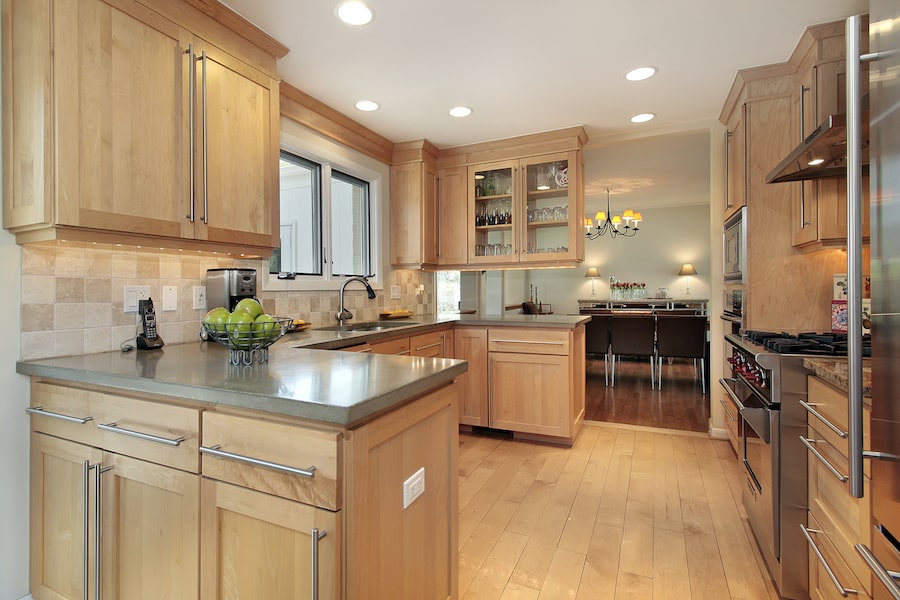
Start With the Feature That Is Staying
If your flooring will remain, treat it as the starting point. Its color can shift with natural light, wall color, and nearby rooms, so view cabinet samples directly against the floor rather than relying on a showroom display or online photo.
If you are replacing both cabinets and flooring, decide which feature will lead the design. Cabinets are at eye level and usually define the kitchen’s style. Flooring connects the kitchen to the rest of the home. In an open-concept layout, the floor may need to coordinate with a living room, hallway, or dining space, making it the more practical first decision.
Establish one fixed element before comparing colors.
Pay Attention to Undertones
Two materials can both be called “brown” and still clash. Most wood, laminate, luxury vinyl, and tile products lean warm, cool, or neutral.
Warm flooring may contain honey, gold, orange, or red. It often pairs well with cream, warm white, taupe, olive, muted green, or wood cabinets with a related warmth.
Cool flooring may lean gray, blue, charcoal, or ashy brown. It generally works with crisp white, deep blue, black, soft gray, or cool-toned wood cabinets.
Neutral flooring sits closer to beige, balanced brown, greige, or natural oak. It offers more flexibility with both painted and stained cabinetry.
The undertones do not need to be identical, but they should feel related. A blue-gray cabinet beside an orange-toned floor can intensify both colors, while soft beige or warm white can create a smoother transition.
Create Contrast Without Creating Conflict
Contrast helps cabinets stand apart from the floor, but it does not always mean combining very dark cabinets with a very light floor. You can create separation through:
Lightness: Choose cabinetry that is noticeably lighter or darker than the floor.
Grain: Pair a quiet cabinet finish with flooring that has more movement.
Texture: Combine smooth painted cabinets with rustic or visibly textured flooring.
Sheen: Use matte or satin cabinets with flooring that reflects light differently.
Color family: Introduce painted cabinets and let the floor provide the room’s main wood tone.
Avoid a cabinet stain that is almost the same as the floor. Near-matches can look accidental, especially when the grain is similar. For a low-contrast kitchen, vary the grain, finish, or material enough to make the pairing feel deliberate.
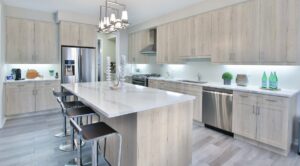
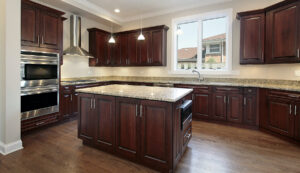
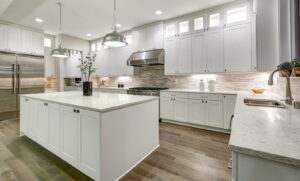
Cabinet Colors for Common Flooring Choices
Light Wood Flooring
Light oak, maple, birch, and pale wood-look floors can make a kitchen feel open and relaxed. White or off-white cabinets create a bright result, but warm floors usually look better with cream or soft white than with a sharp blue-white.
Natural wood cabinetry can also work when it is several shades darker or has a clearly different grain. For stronger contrast, consider navy, forest green, charcoal, or black. Light flooring is especially helpful when you want dark cabinets without making the room feel heavy.
Medium-Tone Wood Flooring
Medium brown floors pair well with warm white, mushroom, taupe, sage, deep green, and many natural wood finishes. If the floor has strong golden, red, or orange tones, avoid repeating that intensity in the cabinets. A quieter neutral lets the floor retain its character without dominating the design.
Dark Wood Flooring
Dark walnut, espresso, and deep brown floors create a rich foundation but absorb more light. Light cabinets are often the safest choice, especially in smaller kitchens or rooms with limited windows. White, cream, pale gray, and light natural wood provide useful contrast.
Dark cabinets can work with dark flooring in a large, well-lit kitchen. Use lighter countertops, a bright backsplash, and layered lighting, and make sure the two tones do not blend into one dark mass.
Gray or Greige Flooring
Gray flooring ranges from cool silver to warm mushroom. Cool gray floors pair naturally with white, black, navy, slate blue, or cool wood cabinets. Warm greige floors are more comfortable with cream, taupe, warm white, natural oak, and muted green.
Do not assume every gray is neutral. A cool gray floor beside yellow-based cabinets may exaggerate both undertones. Viewing samples in the actual room is the most reliable way to judge the relationship.
Tile Flooring
Tile introduces grout lines, texture, and sometimes pattern. Patterned tile usually looks best with simple doors and quieter cabinet colors. Solid-color tile leaves more freedom for wood grain, detailed doors, or a bold painted finish. For patterned tile, consider pulling a secondary shade rather than matching the dominant color.
Luxury Vinyl or Laminate Flooring
Luxury vinyl plank and laminate may reproduce wood or stone with several colors in one plank. Choose a cabinet color that relates to one of the quieter tones, and review a large flooring sample so you can see the full pattern.
Use Countertops and Backsplashes as a Bridge
Cabinets and flooring do not have to carry the entire design relationship. Countertops and backsplashes can connect them.
Warm white cabinets and medium oak floors may be tied together by a countertop with soft brown veining. Dark blue cabinets and light natural flooring can feel more unified with a warm white backsplash. Compare all three samples together, since a countertop that suits the cabinets alone may conflict with the floor.
Hardware can also reinforce the palette. Brushed brass can complement warm flooring and cream cabinetry, while matte black or brushed nickel may suit a cooler or more contemporary combination. Hardware does not have to match every other finish, but it should support the overall direction of the design.
Cabinet and Flooring Combination Guide
The following table provides a quick overview of cabinet colors that commonly work with popular flooring categories.
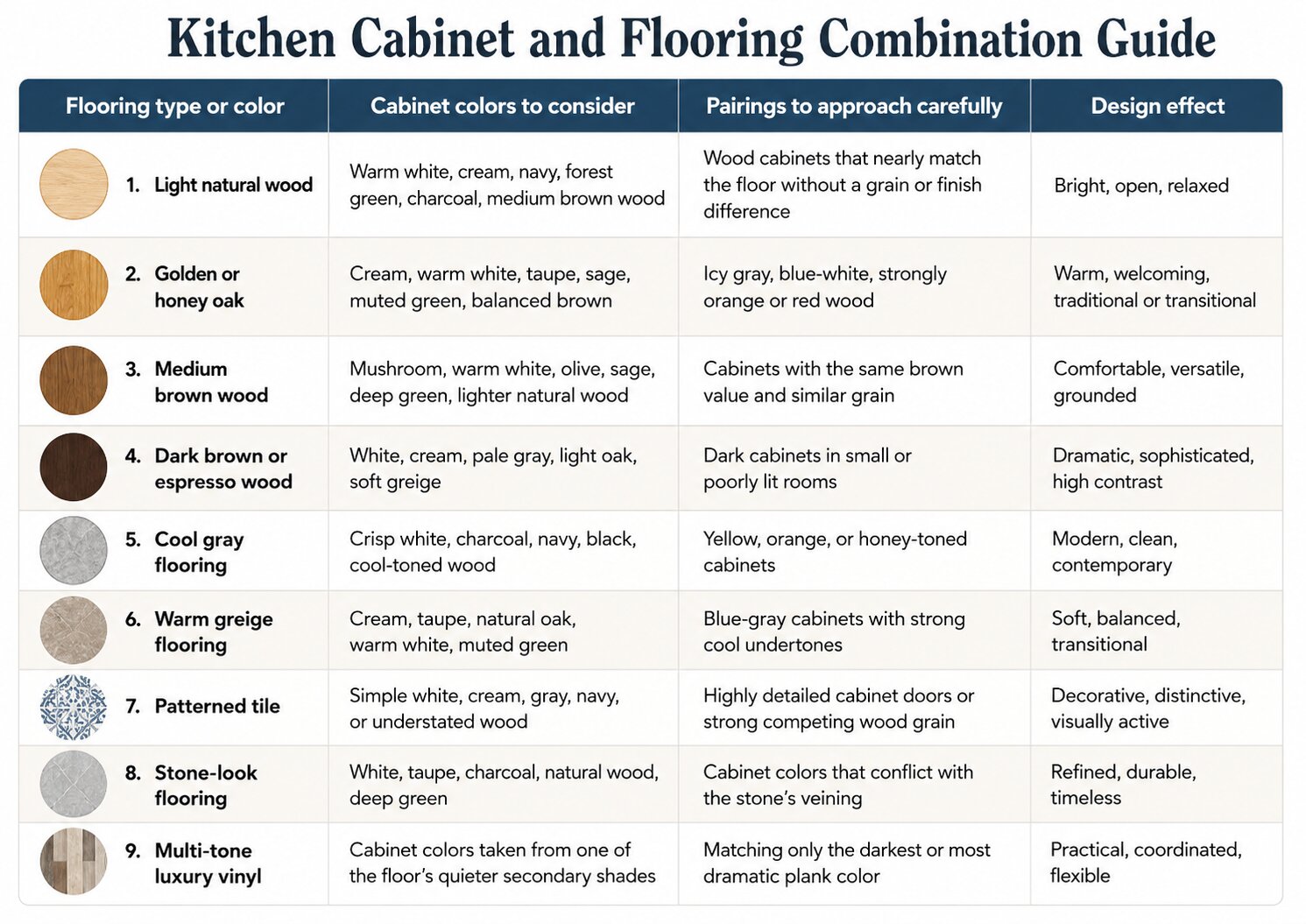
This table should be used as a starting point rather than a strict rule. Lighting, countertops, room size, wall colors, and the specific product finish can all change how a combination appears.
Consider Kitchen Size and Lighting
Color behaves differently in every home. A cabinet finish that looks light in a showroom may appear much darker in a north-facing kitchen. Warm bulbs emphasize yellow and red, while cooler bulbs may make gray finishes look more blue.
Small kitchens often benefit from at least one light major surface. If the floor is dark, lighter cabinets can help lift the room. If the cabinets are dark, a lighter floor and countertop can preserve balance. Large kitchens can support darker combinations, but they still need effective general, task, and accent lighting.
The amount of natural light also matters. A kitchen with large south-facing windows may be able to support deeper cabinet colors. A kitchen with limited daylight may feel more comfortable with warm whites, light woods, or softer midtone finishes.
Remember Adjacent Rooms
The kitchen should feel connected to the rest of the home, particularly when flooring continues through an open layout. Cabinet colors do not need to match nearby furniture, but they should belong to the same palette. Warm woods and beige textiles may not flow naturally into an icy gray kitchen, while a cool, high-contrast home may make orange cabinetry feel out of place.
Look at the kitchen from the rooms and hallways around it. This wider view can reveal color conflicts that may not be obvious when you stand directly in front of a cabinet sample.
Test Samples Before You Decide
Never rely on a color name or screen image alone. Terms such as “natural oak,” “espresso,” “greige,” and “white” vary widely between manufacturers.
Place cabinet and flooring samples together in the kitchen. View them in morning, afternoon, and evening light. Turn on the fixtures you use most. Hold the cabinet sample vertically, since light strikes it differently than a sample lying flat. Whenever possible, compare larger samples. Grain and color variation are difficult to judge from a small piece. This step can prevent an expensive mismatch and provide greater confidence before materials are ordered.
You should also place your countertop and backsplash samples beside the cabinets and flooring. Looking at the complete group helps you identify unwanted undertones before they become permanent parts of the kitchen.
Let Atlas Home Improvement Coordinate Your Kitchen
Choosing cabinets to match your flooring involves more than selecting two colors you like. Undertones, contrast, lighting, countertops, room size, and nearby finishes all influence the final result.
Atlas Home Improvement can help you compare cabinet styles, colors, flooring choices, and the materials that bring a kitchen together. With thoughtful planning and professional installation, you can create a kitchen that looks coordinated, functions well, and feels connected to the rest of your home.
If you live in the Southeast Michigan and need help with your kitchen cabinet and flooring project, contact us today!
Frequently Asked Questions
Should kitchen cabinets be lighter or darker than the flooring?
Either approach can work. Light cabinets over dark flooring create clear contrast and can brighten the room. Dark cabinets over light flooring add depth and drama. Focus on compatible undertones and make sure the room has enough light.
Can cabinets and flooring be the same color?
They can be similar, but an exact match may feel flat. If the colors are close, vary the grain, texture, sheen, or wood species so the two surfaces remain visually distinct.
What cabinet colors work with golden oak flooring?
Warm white, cream, taupe, sage, muted green, and balanced brown can complement golden oak. Icy gray and blue-white are more difficult because they can intensify the floor’s yellow or orange undertones.
What cabinets go with gray flooring?
Cool gray flooring works with white, black, navy, charcoal, and cool-toned wood. Warm greige flooring pairs better with cream, taupe, natural oak, and soft green. Identify the floor’s undertone before choosing.
Should countertops match the cabinets or flooring?
Countertops do not need to match either one. They should connect the overall palette. A countertop can repeat a subtle floor color, contrast with the cabinetry, or include veining that visually links both surfaces.
How many wood tones can you use in one kitchen?
Two or three wood tones can work when each has a clear purpose and their undertones are compatible. Repeating those tones in small details, such as stools or shelves, can make the combination feel intentional.
Related Topics
- Choosing the best paint sheen for a kitchen
- Kitchen cabinet ideas
- Kitchen cabinet inlay vs insets
- Kitchen Remodeling: Step-by-Step Guide to Transform Your Kitchen