



Factors Affecting Kitchen Cabinet Costs: A Complete Guide
Why Kitchen Cabinet Costs Vary So Much
When planning a kitchen remodel, cabinets are often the single largest investment you will make. In fact, cabinetry can account for 35 to 40 percent of your total kitchen renovation budget, making it one of the most important decisions in the entire project.
At Atlas Home Improvement, we understand that Michigan homeowners want both value and quality when upgrading their kitchens. The challenge is that cabinet pricing can vary widely depending on a range of factors. Two kitchens of similar size can end up with drastically different costs simply based on materials, design choices, and installation complexity.
In this guide, we will break down the key factors that impact kitchen cabinet costs so you can make informed decisions, stay within budget, and still achieve a beautiful and functional kitchen.
1. Cabinet Type: Stock vs Semi-Custom vs Custom
One of the biggest factors influencing cabinet cost is the type of cabinets you choose. Cabinets are typically categorized into three main groups, each with its own price range and level of flexibility.
Stock cabinets are the most affordable option. These are mass-produced in standard sizes and come with limited style and color options. Because they are pre-made, they are widely available and quick to install. However, they may require fillers or adjustments to fit your kitchen layout, which can limit efficiency. Another affordable option can be cabinet refacing, which allows you to keep the cabinet boxes and update the doors and hardware.
Semi-custom cabinets fall in the middle. They offer more flexibility in sizing, finishes, and design details while still being based on standardized components. Many homeowners choose this option because it balances customization and cost effectively.
Custom cabinets are built specifically for your kitchen. Every dimension, material, and finish is tailored to your space and preferences. While this offers the highest level of personalization, it also comes at a premium price, often several times higher than stock options.
2. Material Selection
The materials used in your cabinets play a major role in determining cost. Not all cabinets are built the same, and the difference in materials can significantly affect both price and durability.
Solid wood options like maple, cherry, or walnut are among the most expensive choices due to their strength, longevity, and natural beauty. On the other hand, materials like MDF or particleboard are more budget-friendly but may not hold up as well over time with daily use and regular cleaning.
Cabinet box construction also matters. Plywood cabinet boxes tend to cost more than particleboard but offer better resistance to moisture and wear, making them a popular upgrade for long-term value.
Choosing the right material often comes down to balancing upfront cost with long-term performance and your home’s aesthetics. Many homeowners want kitchen cabinets that create a cohesive look with their countertops, flooring, and backsplash.
3. Door Style and Design Complexity
The style of your cabinet doors has a direct impact on cost because it affects how much labor and craftsmanship is required.
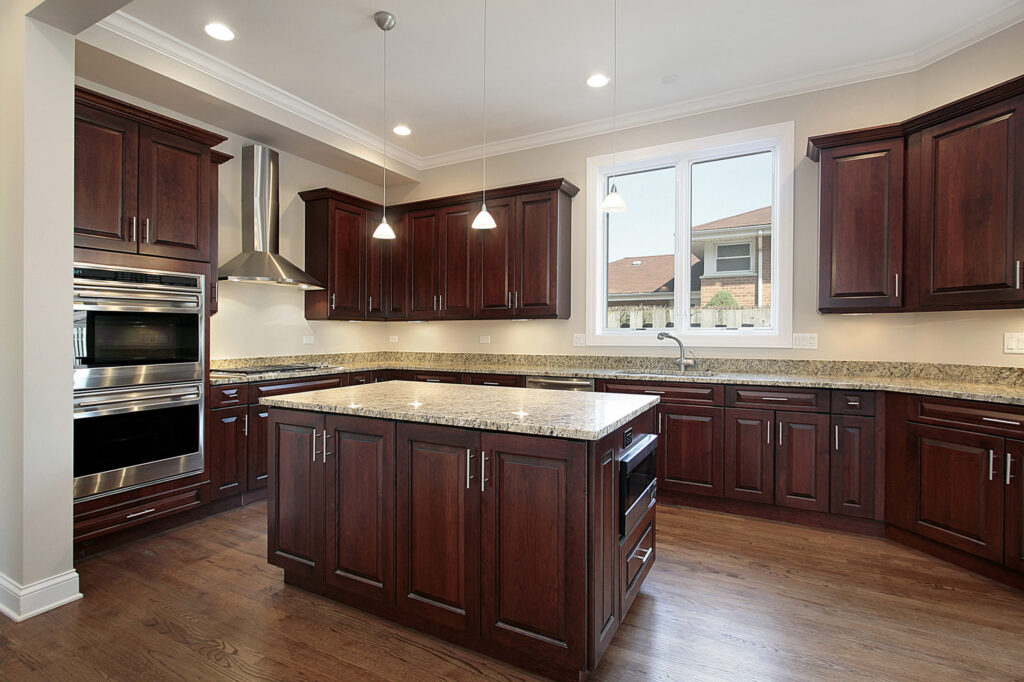
Simple slab or flat-panel doors are usually the most affordable because they require minimal machining. Shaker-style doors are a popular mid-range option that combines affordability with timeless design.
More intricate styles like raised-panel or inset doors are more expensive. These designs require additional craftsmanship, precision, and finishing work, which increases labor costs. Inset cabinetry, in particular, requires exact measurements and alignment, making it one of the most premium options available.
The more complex the design, the higher the price
4. Finish and Color Choices
Finishes do more than define the look of your kitchen. They also play a major role in pricing.
Stained finishes are typically more affordable because they require fewer coats and less surface preparation. Painted cabinets, while popular, tend to cost more because they require sanding, priming, and multiple layers to achieve a smooth, consistent appearance.
Specialty finishes such as glazing, distressing, or high-gloss coatings add even more cost due to the additional labor involved.
Additionally, choosing multiple colors, such as a two-tone kitchen with different upper and lower cabinets, can increase both material and labor expenses.

5. Hardware and Accessories
Cabinet hardware may seem like a small detail, but it can significantly impact the final price.
Basic hinges and drawer slides are the most affordable options, but many homeowners upgrade to soft-close hinges and full-extension drawer slides for improved functionality and durability.
Beyond hardware, interior accessories can quickly add to the cost. Features like pull-out shelves, lazy Susans, spice racks, and organizers enhance usability but come with additional expenses. These upgrades can add hundreds or even thousands of dollars depending on the number and type selected.
While these features improve convenience, it is important to prioritize the ones that truly add value to your daily routine
6. Kitchen Size and Layout
The size and layout of your kitchen are major cost drivers. Simply put, more cabinets mean higher costs.
A larger kitchen requires more materials, more labor, and more installation time. Additionally, complex layouts with angles, corners, or islands can increase costs due to the need for custom sizing or specialized cabinets.
Kitchen islands, in particular, can be more expensive per linear foot because they often require finished panels on all sides and additional structural support.
Even small design changes, such as adding extra storage or extending cabinetry to the ceiling, can significantly impact the overall budget.

7. Labor and Installation Costs
Installation is another critical factor that influences cabinet costs. Even the highest quality cabinets will not perform well if they are installed incorrectly.
Professional installation typically accounts for a significant portion of the total cost, often ranging from 15 to 40 percent of the cabinet budget depending on complexity and location.
Labor costs vary based on region, contractor experience, and the difficulty of the installation. Kitchens with uneven walls, tight spaces, or intricate trim work require more time and expertise, which increases labor costs.
Working with experienced professionals like Atlas Home Improvement ensures that your cabinets are installed correctly and efficiently.
8. Customization and Special Features
Customization is one of the biggest factors that can drive cabinet costs higher.
Custom features such as built-in appliance panels, unique storage solutions, or specialty cabinets designed for specific uses all require additional design, materials, and labor.
While these features can enhance both function and aesthetics, they should be carefully considered to avoid unnecessary expenses.
9. Market Conditions and Location
External factors also play a role in cabinet pricing. Material costs, supply chain issues, and tariffs can all influence the price of cabinetry.
For example, tariffs on imported cabinets and rising shipping costs have contributed to increased prices in recent years.
Additionally, labor costs vary by location. Urban areas with higher demand for skilled labor typically have higher installation costs than rural areas.
10. Quality and Longevity
Finally, the overall quality of your cabinets will affect both the initial cost and long-term value.
Higher-quality cabinets often come with better materials, stronger construction, and longer warranties. While they may cost more upfront, they can save money over time by lasting longer and requiring fewer repairs or replacements.
Lower-cost cabinets may be appealing initially, but they may not hold up as well under daily use, especially in high-traffic kitchens.
Why Understanding Kitchen Cabinet Costs Matters
Kitchen cabinets are more than just storage. They define the look, feel, and functionality of your entire kitchen. Understanding what drives their cost allows you to make smarter decisions and prioritize what matters most.
At Atlas Home Improvement, we work closely with homeowners to design kitchens that align with both their vision and their budget. By focusing on the factors that truly impact cost, we help you get the best value without sacrificing quality.

Ready to Update Your Kitchen?
There is no one-size-fits-all price for kitchen cabinets. Costs can vary widely depending on factors like cabinet type, materials, design complexity, finishes, and installation.
The key to a successful cabinet remodel is understanding these variables and making informed choices that align with your goals. Whether you are aiming for a budget-friendly update or a fully custom kitchen, knowing what impacts cabinet costs will help you plan more effectively.
If you are ready to start your kitchen renovation, Atlas Home Improvement is here to help guide you every step of the way. Contact our team online or call 734-344-4788 to schedule a free consultation!
FAQ: Factors Affecting Kitchen Cabinet Costs: A Complete Guide
Q: What is the average cost of kitchen cabinets?
The cost varies widely, but most homeowners spend anywhere from a few thousand dollars for stock cabinets to tens of thousands for custom cabinetry, depending on size and materials.
Q: Are custom cabinets worth the extra cost?
Custom cabinets are worth it if you want a perfect fit, unique design, and premium materials. However, semi-custom options often provide a great balance of cost and flexibility.
Q: What is the most affordable cabinet option?
Stock or ready-to-assemble cabinets are typically the most budget-friendly choice, though they offer limited customization.
Q: How can I reduce cabinet costs without sacrificing quality?
You can save money by choosing semi-custom cabinets, sticking to standard sizes, limiting custom features, and selecting cost-effective materials like MDF with durable finishes.
Related Topics
-
- Where to Put Your Kitchen Sink: The Best Placement for Function, Style, and Flow
- Why Inset Kitchen Cabinets Are Worth the Investment for Your Remodel
- Kitchen Island With Cooktop: The Pros and Cons Homeowners Should Know
- Best Paint for Kitchen Cabinets: Comparing the Top Paint Types for a Durable Finish